Winter in West Palm Beach is usually mild, but cooler nights, lower sun intensity, and occasional cold snaps can still affect your pool. In South Florida, “winterization” is less about closing your pool and more about seasonal adjustments that protect your water, your filter system, and your equipment so you stay swim-ready and avoid surprise repairs.
This guide covers practical homeowner tips, what to watch for as temps drop, and how to prep your pool for colder evenings without overcomplicating it.
What “pool winterization” means in South Florida
In many states, winterization means draining lines and shutting everything down. In West Palm Beach, most pools stay open year-round. The goal here is to:
-
Keep water balanced and clear during lower-use months
-
Maintain healthy circulation and filtration
-
Prepare for short cold snaps that can stress equipment
-
Prevent small issues from turning into expensive repairs when spring arrives
Why winter prep matters for West Palm Beach homeowners
Even if you are swimming less, your pool still needs consistent care. Skipping winter maintenance can lead to:
-
Cloudy water that is harder to clear later
-
Algae growth when sanitizer drifts too low
-
Rising filter pressure from buildup and debris
-
Pump and filter strain from restricted flow
-
Surprise equipment problems when you want to use the pool again
Winter pool care checklist for West Palm Beach
1) Keep testing weekly and make small adjustments
Cooler water usually means lower chlorine demand, but that does not mean you can ignore chemistry. Winter is when pools often drift out of range slowly, and homeowners do not notice until water looks dull.
Focus on:
-
Free chlorine consistency (avoid big swings)
-
pH staying in range (high pH can make chlorine less effective)
-
Total alkalinity staying steady (helps prevent pH bounce)
-
Stabilizer (CYA) staying in a safe range so chlorine remains effective
If you want help keeping chemistry stable all winter, use or Weekly Pool Service
2) Adjust pump run time for winter conditions
You can often reduce run time in winter, but do not cut it so far that circulation suffers. Good circulation supports filtration and helps sanitizer move through the pool.
Best practice:
-
Maintain a consistent daily schedule
-
If a cold snap is forecast, run the pump during the coldest hours to keep water moving
-
If you have automation, confirm schedules are correct and the system is actually turning on when expected
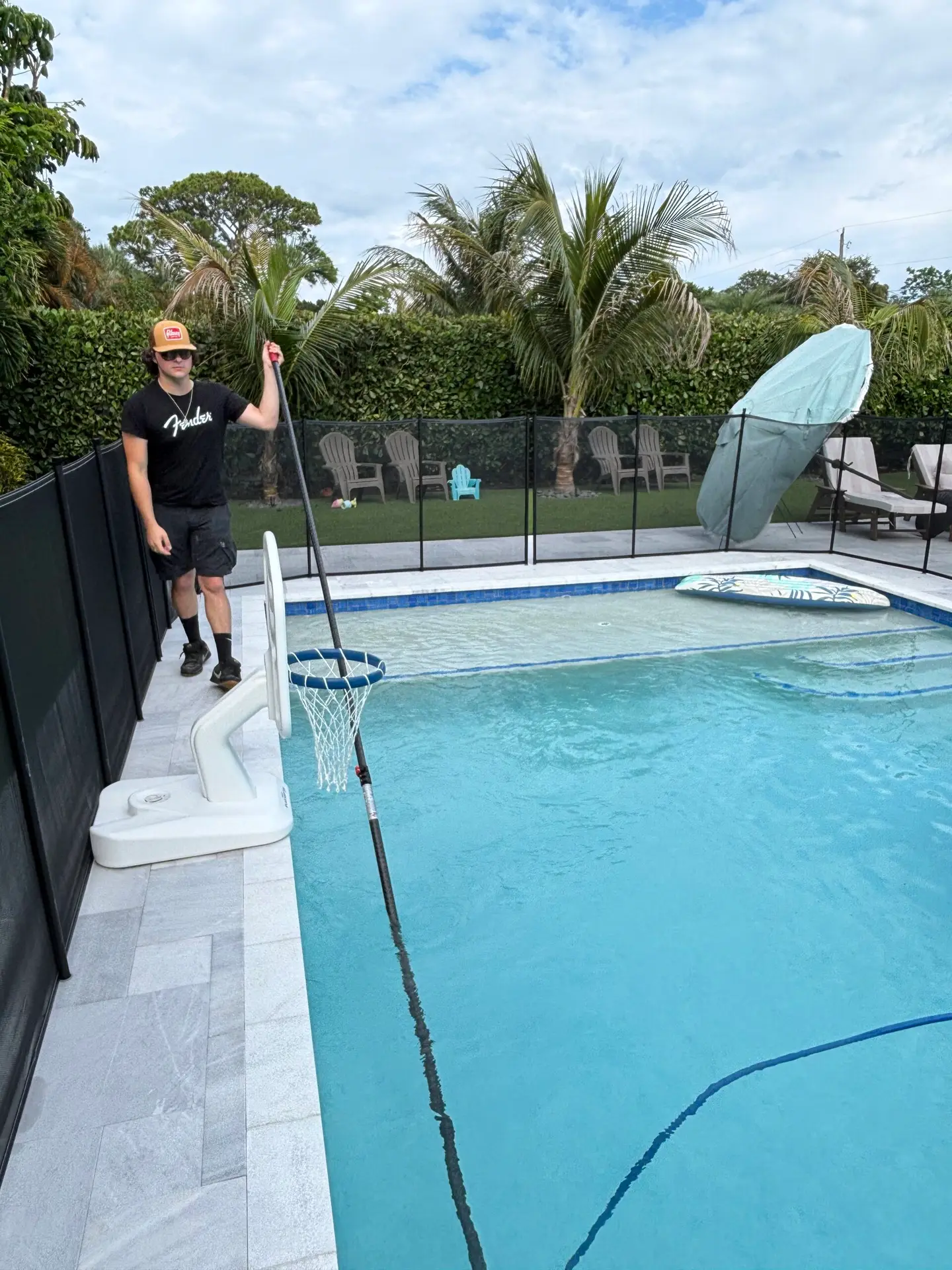
3) Brush and skim more than you think you need to
Winter water can look “fine” while algae starts as a thin film on walls, steps, and corners. Brushing breaks that film before it becomes a bigger issue.
Weekly habits that pay off:
-
Brush walls, steps, and the tile line
-
Skim the surface and remove debris early
-
Vacuum as needed, especially after windy days
4) Winter is prime time for filter performance
Your filter is a major reason your water stays clear. In winter, many homeowners do not notice early filter problems because the pool is used less, but the system is still working.
Watch for:
-
Dull or hazy water even when chemicals seem okay
-
Weak return jets
-
Filter pressure rising faster than normal
-
Dirt and debris returning to the pool after cleaning
Learn more about keeping your system running efficiently: Pool Filter Cleaning
If your pressure stays high, flow stays weak, or the system will not hold a clean baseline, it may be time to repair or replace parts
5) Cold snap prep that actually makes sense for Florida
Most West Palm Beach winters are comfortable, but cold snaps can happen. Your goal is to protect circulation and avoid equipment stress.
Quick cold snap checklist:
-
Confirm the pump is running and circulating properly
-
Empty baskets so water flow is not restricted
-
Verify timers are correct (especially after power flickers)
-
If you have automation, confirm freeze protection settings are enabled (if available)
-
Walk the pad and look for small leaks, drips, or unusual noises before the coldest night
6) Do a winter “pool health check” before spring
Winter is a smart time to catch small issues before pool demand spikes again.
A simple health check includes:
-
Confirming your clean filter pressure baseline
-
Inspecting cartridges, grids, or sand condition
-
Checking pump flow, seals, and overall performance
-
Looking for early signs of leaks or air in the system
-
Confirming heaters or automation respond correctly (if you have them)
Common winter pool problems and what they usually mean
Cloudy water that keeps coming back
Often tied to filtration, circulation, or pH drifting high. Winter is when filter cleaning makes a noticeable difference.
Pressure keeps rising quickly after cleaning/backwashing
Usually indicates buildup, undersized filtration, or a component issue that needs attention.
Weak returns or poor circulation
Could be a clogged filter, a pump issue, or an air leak in the system. This is when filter repair or equipment diagnostics saves money long-term.