
Pool Automation in West Palm Beach, FL
Premium Pool Automation for Homeowners Across West Palm Beach, FL

Schedule Service!
Stop Walking Out to the Equipment Pad
Imagine running your entire pool from your phone. Warm up the spa from the couch before you head out back, set the lights for a Saturday-night party, run the pump in off-peak hours to save money, all without ever walking out to the equipment pad. That’s pool automation, and once you have it you’ll wonder how you ever lived without it. Simple Pool Care installs and sets up smart pool automation all over West Palm Beach and Palm Beach County. Call (561) 567-0822 or request a free quote.
What you can actually control
A modern automation system ties all your equipment into one app or panel so you can manage:
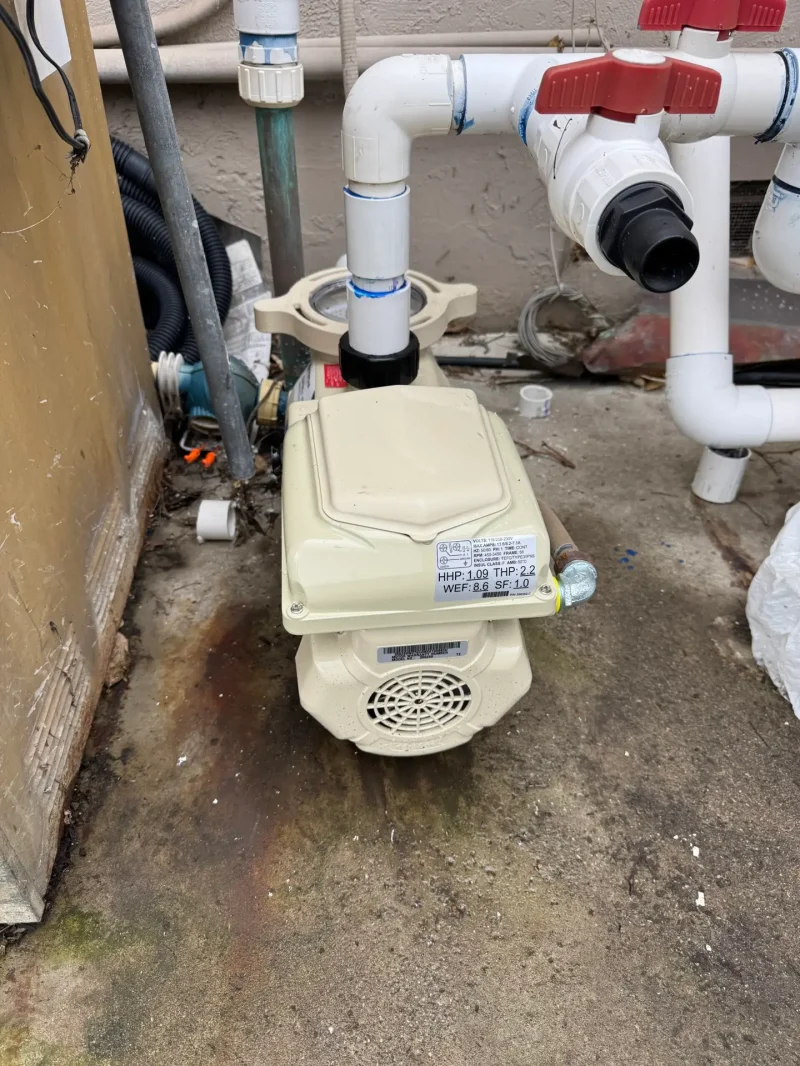
- Your pump, with custom schedules and big energy savings on a variable-speed model.
- Your heater and spa, so the water’s the perfect temperature exactly when you want it.
- Your lights, including color changes and scenes for entertaining.
- Water features like bubblers, fountains, and spillways at the tap of a button.
- Your salt system and sanitizer, kept dialed in automatically.
- All of it, from anywhere, on your phone, tablet, or with Alexa and Google voice control.
No more flipping breakers or wondering whether you left the pump running all day.
Need pool service? Get in touch with us and schedule your FREE pool service quote from Simple Pool Care
What pool automation costs in West Palm Beach
Honest answer: it depends on how much you want it to do. Ballpark for our area:
- A basic system that app-controls your pump, heater, and lights (the setup most homeowners want) runs about $2,000 to $5,000 installed, depending on the brand and your equipment.
- A fully loaded system with valve actuators, full spa integration, automated chemical dosing, expanded lighting, and water features can run $10,000 and up.
We walk you through exactly what each level does and quote it clearly, so you only pay for the features you’ll actually use.
Where the Savings Actually Come From
Automation saves real money, and it’s worth being precise about where the money comes from, because there are two different claims in here and only one of them applies to everybody.
The big one is speed. A variable-speed pump running slower for longer moves the same water for a fraction of the power, and automation is what lets you build and hold that schedule instead of flipping a dial. Paired with a variable-speed pump, most homeowners here trim $50 to $150 a month off their pool’s energy use, and the system often pays for itself within a couple of years. In our climate, where the pump runs every month of the year, that adds up fast.
The smaller one is timing, and it depends on your bill. The industry splits the day into on-peak, generally 7:00 a.m. to 11:00 p.m. on weekdays, and off-peak, which is 11:00 p.m. to 7:00 a.m. on weekdays plus all day Saturday, Sunday and holidays. Shifting your pump into those hours only saves you anything if you’re on a rate that charges differently by time of day. Plenty of homeowners are not, and on a flat rate a kilowatt-hour at 2 a.m. costs exactly what it costs at 2 p.m.
So check your bill. If you’re on a time-varying rate, automation will move your run hours for you and you’ll see it. If you’re not, ignore the timing entirely and put every dollar of the argument on the pump speed, where it belongs. We’ll tell you which one you’re looking at before you spend anything.
Why One Turnover Is Not Enough
The first thing most people do with a new timer or a new app is shorten the run time to save money. The math says that’s backwards, and this is the part of automation nobody explains.
A turnover is the time it takes to push your pool’s entire volume through the filter once. You’d think one turnover means the water is clean. It doesn’t. Filtered water goes back into the pool and mixes with unfiltered water, so one turnover gets you to about 63% filtered. A second turnover takes you to 86%. A third gets 95%. It takes four turnovers to get down to 2% unfiltered, which is the daily standard commercial pools are built around.
Your backyard pool isn’t a commercial pool and doesn’t need to hit a code number. But the shape of the curve is the same, and it explains why a pool that “runs six hours a day” can still look hazy in August.
What you actually want is a long run at low speed. That’s more turnovers, less power, and quieter equipment, and it’s the one thing a mechanical time clock physically cannot do. It’s also the honest reason to buy automation: not because an app is fun, but because it’s the only practical way to get the run hours your water needs at a cost you’ll tolerate.
One warning while we’re on flow. If somebody suggests solving a circulation problem by dropping in a bigger pump, be careful. Higher flow can exceed the maximum flow velocity rating of your anti-entrapment drain covers, your filter and your piping. That’s a safety limit, not just an efficiency one.
The snowbird's best friend
Here’s where automation really shines in South Florida: you can check on and control your pool from anywhere. If you head up north for the summer, travel for work, or own a rental or vacation property down here, you can warm the spa for arriving guests, confirm the pump’s running, and keep an eye on everything from your phone hundreds of miles away. For seasonal homeowners and Airbnb hosts across Palm Beach County, that peace of mind is worth the upgrade on its own.
Brands we install
We’re certified on the big names, including Pentair (IntelliCenter, IntelliTouch), Hayward (OmniLogic, OmniHub), and Jandy (iAquaLink). The right system usually comes down to what equipment is already on your pad, and we’ll match you to the platform that integrates cleanest rather than forcing a one-size-fits-all box. Whatever we install goes in to spec, so it’s reliable and genuinely easy to use.
Automated Chemistry Is Not Autopilot
We sell automated chemical control and we’ll happily install it. We’d also rather you knew what it does before you buy it, because the gap between what people expect and what the equipment measures is where the disappointment lives.
A chemical controller is two probes, a processor and a feed pump. One probe reads pH. The other reads ORP, short for oxidation reduction potential, sometimes called redox. ORP is the oxidizing capacity of your water, measured in millivolts.
Four things about that measurement are worth knowing:
- It’s indirect. ORP approximates your disinfectant level. It doesn’t measure chlorine. And the relationship isn’t a straight line: at low chlorine, ORP jumps hard on a tiny change. At high chlorine, it barely twitches on a big one.
- Your stabilizer drags it down. As chlorine binds to cyanuric acid, its oxidation potential drops and the controller reads low. Every outdoor pool in South Florida runs stabilizer, so this isn’t an edge case here. It’s Tuesday.
- Probes foul. A film of minerals, body oils, sunscreen and cyanuric acid builds on the probe surface. You can’t see it. It makes the reading slow and wrong. Monthly cleaning is the usual advice, and with cyanuric acid in the water, fouling can set in within days or weeks.
- You still have to test by hand. Health codes and the labels on the chemicals themselves require a periodic manual test even where ORP control is installed. There’s no version of this where nobody ever picks up a test kit again.
None of that is an argument against automation. It’s an argument against treating it as a person. The controller holds your chemistry between visits far better than you or a tablet feeder ever will. What it can’t do is clean its own probes, calibrate itself against a known standard, or notice that the reading has been quietly drifting for three weeks.
That part is a job, and it’s ours. It’s the reason we recommend automation and weekly service together rather than one instead of the other, and it’s why we’ll talk you out of a chemical controller if nobody is going to maintain it.
What Automation Means Past the App
Most automation gets sold as a phone app. The app is the smallest part of it. Here’s what else is on the table, and why the install matters more than the brand.
Automated backwash. A filter can be run by a small microprocessor with solenoid valves controlling flow, either for one filter or the whole system. The processor watches the water going in, the water coming out and the flow rate through a remote digital flow meter, and when performance drops below a preset level it runs the backwash sequence itself. You never touch it. Worth knowing before you choose a filter, because not every filter is a candidate.
Interlocks, and one that’s a genuine safety device. A chemical feeder has to be wired so it can’t dose into water that isn’t moving. And if you have a salt system, your cell has an interlock that shuts it down whenever the pump is off. That isn’t a convenience feature. Making chlorine from salt produces traces of hydrogen gas, which vent away harmlessly while water is flowing. Pump off and cell running, that gas accumulates, and the interlock is there so it never gets the chance to become an explosion hazard.
This is why the wiring order on a retrofit isn’t a matter of taste. Anyone who puts a salt cell on a switched relay without the flow interlock has built something dangerous with a nice app on the front of it.
And a detail that tells you whether the install was done properly. A pH probe sitting more than 20 feet from its controller needs a preamplifier to deliver a clean signal to the panel. Most residential equipment pads are inside that distance. Some are not, and those are exactly the ones where a cheap install starts reading nonsense about six months in.
New system or upgrading an old panel?
You don’t need a brand-new pool to go smart. If you’ve got an older mechanical time-clock setup or a dated control panel, we can usually retrofit modern automation without tearing everything apart. Sometimes an older pool reveals equipment that was never built for efficient control, and in those cases we’ll suggest pairing the automation with a pump, heater, or filter upgrade so the whole system works together. Either way, we’ll lay out your options honestly.
How it works
- We look at your equipment pad, electrical, and how you actually use your pool, and talk through what you want to control.
- We recommend the right platform and features, and give you clear pricing for each.
- Our techs handle the full install: wiring, valve actuators, plumbing, and programming.
- We set up your schedules, scenes, and app, then walk you through running it so it’s easy from day one.
- Most systems are done in a single visit, taking your pool from manual to smart fast.
Ready to control your pool from your phone?
Stop walking out to the equipment pad. We install pool automation across West Palm Beach and most of Palm Beach County, and the full list of areas is at the bottom of this page. Call Simple Pool Care at (561) 567-0822 or request your free quote online. Local, licensed, insured, and 5-star rated by your neighbors all over Palm Beach County. Automation is one of our specialty pool services, and we’ll keep your whole system running smooth with weekly pool service long after it’s installed.
We Are Experts With:




Your Trusted Pool Service Partner
It’s easy to get started with Simple Pool Care.
Trusted by 100+ homes throughout West Palm Beach and neighboring cities.
We treat our customers like family, which is why we crafted our Pool Service plans to service our customers with the utmost professional service so you can enjoy your pool worry free.
Built Around Reliable Service
We show up when we say we will, we quote before we start, and we tell you what your pool actually needs rather than what’s easiest to sell. That’s most of it.
Over 10 years of experience in the pool service industry spanning across 2 counties.
Servicing over 100+ customers a year while maintaining a 5 star rating from our clients.
When you choose Simple Pool Care, you have a friend in the industry you can trust.
We are available day and night for our customers. We take your business seriously.
Frequently Asked Questions
The questions we get asked most often about pool automation.
It depends on how many functions you want to control. A basic system that app-controls your pump, heater, and lights, which is what most homeowners want, typically runs about $2,000 to $5,000 installed, depending on the brand and your existing equipment. A fully loaded system with valve actuators, full spa integration, automated chemical dosing, expanded lighting, and water features can run $10,000 or more. We give you a clear, itemized quote up front so you only pay for what you'll use.
For most homeowners here, yes, and it's worth knowing where the money actually comes from. Paired with a variable-speed pump, automation typically saves $50 to $150 a month by running your pump slower for longer instead of flat out for a short stretch, which usually pays for the system within a couple of years. The other savings people talk about, shifting the pump into off-peak hours, only applies if you're on a rate that charges differently by time of day. On a flat rate, 2 a.m. costs the same as 2 p.m. We'll tell you which one you're on before you spend anything. Beyond the money, almost nobody who installs it regrets it, and the most common reaction is wondering why they waited.
Yes. We retrofit modern automation onto existing pools all the time, including older mechanical time-clock setups, usually without major reconstruction. Occasionally an older pool has equipment that wasn't built for efficient control, and in those cases we'll recommend pairing the automation with an equipment upgrade so it all works together. We'll tell you exactly what your pool needs.
There's no single best one, it depends mostly on the equipment already on your pad. Pentair IntelliCenter, Hayward OmniLogic, and Jandy iAquaLink are all excellent, and we're certified on all three. We'll recommend the platform that integrates most cleanly with your pump, heater, and other gear so you get reliable performance without compatibility headaches.
Yes. With remote access, you can adjust schedules, temperatures, lighting, and water features from anywhere with an internet connection, whether you're at work, traveling, or up north for the season. It's especially popular with snowbirds and rental-property owners who want to warm the spa for guests or confirm the pump is running from hundreds of miles away.
A full system can control your pump and filtration schedules, pool and spa heating, LED and color-changing lights, water features like fountains and spillways, and your salt system and sanitizer levels. Many systems also offer remote monitoring of temperature, flow, and water quality, plus voice control through Alexa or Google Home. Past the app, automation can also run a filter's backwash cycle on its own, using a flow meter to watch performance and trigger the sequence when it drops below a set level, and it handles safety interlocks like shutting your salt cell down whenever the pump is off.
Most standard automation installs are completed in a single day. More complex systems, those with multiple valve actuators, spa integration, chemical automation, or extensive water features, can take longer, and we'll give you a clear timeframe before we begin.
It doses them. It doesn't really test them, and the difference matters. A chemical controller uses two probes: one for pH, one for ORP, which is a millivolt reading of how much oxidizing capacity is in the water. ORP approximates your chlorine level, it doesn't measure it, and the relationship isn't linear. Cyanuric acid, which every outdoor pool in Florida runs, pulls ORP readings down as chlorine binds to it. On top of that, probes foul with a thin film of minerals, body oils and sunscreen that you can't see and that makes readings slow and inaccurate, sometimes within days or weeks. Health codes and the chemical labels themselves still call for a periodic manual test even with ORP control installed. So automation holds your chemistry steady between visits far better than tablets ever will, but somebody still has to clean the probes, calibrate them against a known standard, and test the water for real.
Yes, and honestly the two work best together. Automation handles the things that need doing every day, holding your pump schedule, your heat, and your sanitizer between visits without anybody thinking about it. What it can't do is clean and calibrate its own probes, brush your walls, empty baskets, check that the readings it's reporting are actually true, or notice that something has been quietly drifting for three weeks. Those are the jobs that keep the automation honest. We'd rather sell you automation and weekly service together than sell you automation and have you find out in August that nobody was watching it.
